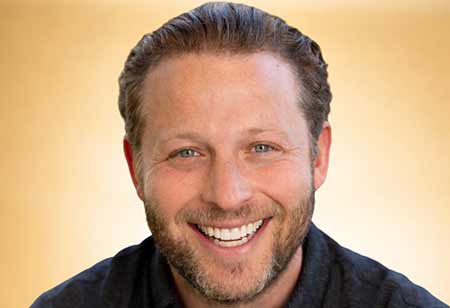


Brewster founded Bulwark with the belief that buying insurance should be effortless. A seasoned technology entrepreneur with 3 previous exits, he is convinced of the power of AI to augment human capabilities to deliver better service and outcomes for all. Prior to entering insurance, he served as a senior product executive at Google and Adobe. He's a licensed producer in 18 states and graduated magna cum laude in Philosophy, Politics, and Economics; and in Communication from the University of Pennsylvania.
AI at the Core, Humans at the Center
There is a fast-growing market perspective that AI is going to replace insurance agents. That couldn’t be further from the truth.
Insurance has always been a relationship business. That will not change. People still want a person they can trust, someone they can have lunch with, someone who knows their family, their business, their home, and their tolerance for risk. When a claim goes sideways, when a house burns down, when a child has an accident, or when a client is staring at an unexpected premium increase, no one wants to be routed through a chatbot and told their issue has been “successfully received.”
The mistake is assuming that because insurance requires human trust, it should continue to rely on human labor for every step of the process.
The future of insurance distribution will not be “AI agents instead of human agents.” It will be AI at the core of the agency operating model, with humans focused on the work humans do best: building relationships, exercising judgment, advising clients, negotiating complexity, and showing empathy when things go wrong.
That distinction matters. Today, too much of agency work is still buried in repetitive administrative labor. Producers and account managers spend enormous amounts of time gathering information, rekeying data, filling out carrier forms, chasing documents, comparing policy language, preparing proposals, and moving information across systems that were never designed to talk to each other. Industry surveys have found that the average insurance agent spends only ~35 percent of their time selling. Whatever the exact number, the operational reality is obvious to anyone who has worked inside an agency: the people best suited to advise and sell are too often trapped doing clerical work.
That is backwards.
AI should gather the information. AI should read the declaration pages. AI should extract the driver, vehicle, property, coverage, renewal, and claims details. AI should enrich the file with trusted third-party data where appropriate. AI should complete applications, prepare submissions, generate draft proposal comparisons, proactively identify gaps, summarize tradeoffs for human review, and monitor the workflow from intake to bind. AI should turn an unstructured mess of emails, PDFs, carrier portals, policy forms, and customer notes into a structured operating system for the agency.
The human agent should not disappear. The human agent should be elevated. AI should give them superpowers.
A great advisor understands context. They know when the cheapest premium is the wrong recommendation. They can explain why a high-net-worth homeowner may need broader loss-of-use coverage, better water damage protection, or a carrier with stronger claims handling. They can sit across the table from a wealth manager, attorney, real estate agent, or client and translate insurance from a commodity purchase into a thoughtful risk strategy.
The agency of the future wins by augmenting these most capable advisors with the power of always-on AI.
Because clients don’t want an AI-only experience. Vertafore’s 2025 consumer research found that 85 percent of policyholders prefer a human-assisted search when shopping for insurance, and nearly 90 percent want agent involvement when managing their policy, either exclusively or alongside digital tools. That is the shape of the market: human guidance, digitally enabled.
At Bulwark.ai, we are building around that premise. We believe the winning insurance agencies will be those that are AI-native at the operational layer and deeply human at the relationship layer. We don’t remove the advisor from the client relationship; we empower them to do their highest-value work by removing unnecessary friction and burdensome toil.
For a client, that means a faster, more transparent, more modern experience. Instead of filling out endless forms or waiting weeks for a proposal, clients should be able to provide basic information and documents once, then receive a clear, thoughtful recommendation that explains the options in plain English. They should be able to ask questions at any time, see what is happening in the process, and know when a licensed human is reviewing the recommendation.
For an agency, it means a fundamentally different level of productivity. The constraint should not be how many PDFs an account manager can process in a week, how many carrier portals a producer can navigate, or how many times the same address can be typed into different systems. The constraint should be trust, expertise, and distribution. In other words, the things that truly matter most.
This shift will require agencies to evolve. They will need cleaner data models, better integrations, stronger operational discipline, documented workflows, AI governance, and a willingness to redesign work rather than merely bolt new tools onto old processes. The agencies that treat AI as a side project will get modest efficiency gains. The agencies that rebuild their operating model around AI will create a different kind of business: faster, more scalable, more responsive, and ultimately more valuable.
The next era of insurance distribution will belong to agencies that understand the division of labor. Let humans do what humans do best. Let AI do what AI does best. The result is not a colder insurance experience. It is a more human one, because the people who build trust are finally freed from the work that gets in the way of it.
AI at the Core, Humans at the Center
There is a fast-growing market perspective that AI is going to replace insurance agents. That couldn’t be further from the truth.
Insurance has always been a relationship business. That will not change. People still want a person they can trust, someone they can have lunch with, someone who knows their family, their business, their home, and their tolerance for risk. When a claim goes sideways, when a house burns down, when a child has an accident, or when a client is staring at an unexpected premium increase, no one wants to be routed through a chatbot and told their issue has been “successfully received.”
The mistake is assuming that because insurance requires human trust, it should continue to rely on human labor for every step of the process.
The future of insurance distribution will not be “AI agents instead of human agents.” It will be AI at the core of the agency operating model, with humans focused on the work humans do best: building relationships, exercising judgment, advising clients, negotiating complexity, and showing empathy when things go wrong.
That distinction matters. Today, too much of agency work is still buried in repetitive administrative labor. Producers and account managers spend enormous amounts of time gathering information, rekeying data, filling out carrier forms, chasing documents, comparing policy language, preparing proposals, and moving information across systems that were never designed to talk to each other. Industry surveys have found that the average insurance agent spends only ~35 percent of their time selling. Whatever the exact number, the operational reality is obvious to anyone who has worked inside an agency: the people best suited to advise and sell are too often trapped doing clerical work.
That is backwards.
AI should gather the information. AI should read the declaration pages. AI should extract the driver, vehicle, property, coverage, renewal, and claims details. AI should enrich the file with trusted third-party data where appropriate. AI should complete applications, prepare submissions, generate draft proposal comparisons, proactively identify gaps, summarize tradeoffs for human review, and monitor the workflow from intake to bind. AI should turn an unstructured mess of emails, PDFs, carrier portals, policy forms, and customer notes into a structured operating system for the agency.
The human agent should not disappear. The human agent should be elevated. AI should give them superpowers.
A great advisor understands context. They know when the cheapest premium is the wrong recommendation. They can explain why a high-net-worth homeowner may need broader loss-of-use coverage, better water damage protection, or a carrier with stronger claims handling. They can sit across the table from a wealth manager, attorney, real estate agent, or client and translate insurance from a commodity purchase into a thoughtful risk strategy.
The agency of the future wins by augmenting these most capable advisors with the power of always-on AI.
Because clients don’t want an AI-only experience. Vertafore’s 2025 consumer research found that 85 percent of policyholders prefer a human-assisted search when shopping for insurance, and nearly 90 percent want agent involvement when managing their policy, either exclusively or alongside digital tools. That is the shape of the market: human guidance, digitally enabled.
-
The future of insurance is not AI replacing human agents. It is AI handling the operational work so advisors can focus on what matters most: judgment, relationships, and trust.
At Bulwark.ai, we are building around that premise. We believe the winning insurance agencies will be those that are AI-native at the operational layer and deeply human at the relationship layer. We don’t remove the advisor from the client relationship; we empower them to do their highest-value work by removing unnecessary friction and burdensome toil.
For a client, that means a faster, more transparent, more modern experience. Instead of filling out endless forms or waiting weeks for a proposal, clients should be able to provide basic information and documents once, then receive a clear, thoughtful recommendation that explains the options in plain English. They should be able to ask questions at any time, see what is happening in the process, and know when a licensed human is reviewing the recommendation.
For an agency, it means a fundamentally different level of productivity. The constraint should not be how many PDFs an account manager can process in a week, how many carrier portals a producer can navigate, or how many times the same address can be typed into different systems. The constraint should be trust, expertise, and distribution. In other words, the things that truly matter most.
This shift will require agencies to evolve. They will need cleaner data models, better integrations, stronger operational discipline, documented workflows, AI governance, and a willingness to redesign work rather than merely bolt new tools onto old processes. The agencies that treat AI as a side project will get modest efficiency gains. The agencies that rebuild their operating model around AI will create a different kind of business: faster, more scalable, more responsive, and ultimately more valuable.
The next era of insurance distribution will belong to agencies that understand the division of labor. Let humans do what humans do best. Let AI do what AI does best. The result is not a colder insurance experience. It is a more human one, because the people who build trust are finally freed from the work that gets in the way of it.